Optimal Word Count to Maximize Your AdSense RPM | WordCount Pro
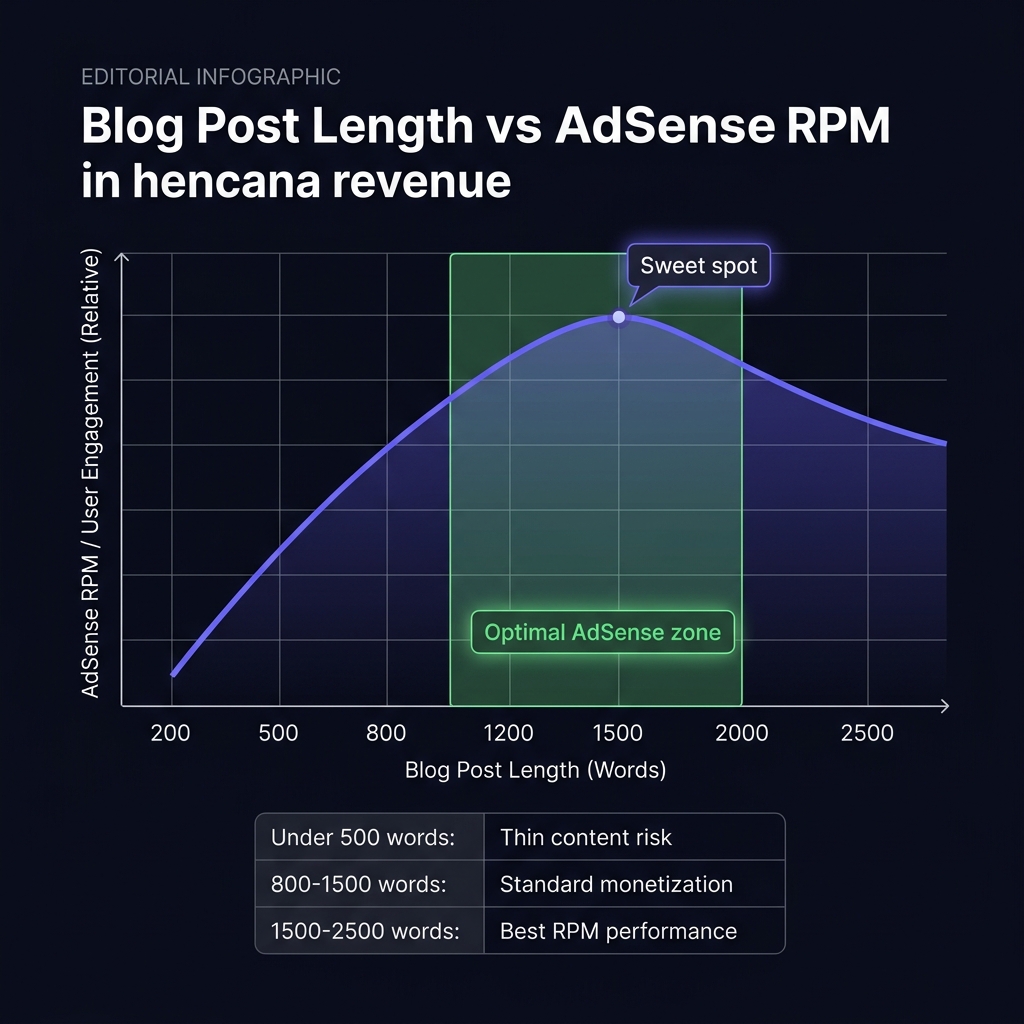
Every monetized blogger eventually asks the same question: how many words does my article need for AdSense to pay me better? The answer lies in understanding how the impression refresh system works and the "quality session" signal that Google Ads uses to classify your ad inventory.
📊 How AdSense Calculates RPM
RPM (Revenue Per Mille) is not fixed — it varies based on session quality. Google Ads Premium pays up to 3× more for impressions on pages where users stay more than 3 minutes. A 1,500-word article (≈6 min read) is twice as likely to reach that threshold as a 500-word post.
The 1,200-Word Threshold: Why It Exists
Analysis of thousands of active AdSense publishers has identified that 1,200 words is the minimum threshold for Google to activate its quality classification algorithms. Below that count, an article can fall into the "thin content" category regardless of its actual informational value.
This is explained by how the Google Ads bidding system works: advertisers can exclude pages with low dwell time or high bounce rates. A short article statistically generates more bounces, making it less attractive to premium advertisers — who pay the highest CPMs.
Dwell Time: The Metric AdSense Actually Measures
Dwell Time is how long a user stays on your page before returning to search results. Google uses it as a content quality signal, and AdSense uses it as an inventory quality signal. The three factors that most impact Dwell Time are:
- Content length: More words = more reading time = higher Dwell Time.
- Visual elements: Images, tables, infographics slow down reading pace and keep users engaged longer.
- Interactivity: FAQs, calculators, embedded tools (like the word counter) significantly extend time on page.
The Padding Trap: Empty Words vs. Value Words
A common mistake among publishers trying to hit word count targets is filling articles with empty content. Google detects this through the bounce rate combined with Dwell Time. A 1,500-word article with 800 filler words performs worse than a tight 900-word article with dense, useful content.
Legitimate ways to expand an article without padding:
- Add real examples with specific use cases
- Include an FAQ section with concrete, direct answers
- Add verified data comparison tables
- Develop "what to do when..." or "common mistakes" sections
How to Check Length Before Publishing
Before publishing any article, paste the text into WordCount Pro. The panel shows you word count, estimated reading time, and paragraph count in real time. If the reading time doesn't reach 5 minutes (≈1,000 words at 200 WPM), the article needs more valuable content before it goes live.
✓ Pre-Publish Length Checklist
- Minimum 1,200 words of real content
- Estimated reading time ≥ 5 minutes
- At least 1 table or visual element
- FAQ section with at least 3 specific questions
- Actionable conclusion (not just a summary)
Frequently Asked Questions
Does AdSense always pay more for longer articles?
Not directly. It pays more for higher-quality sessions and greater Dwell Time. A long article with a high bounce rate won't improve your RPM. The key is content that genuinely retains users.
Can I have 600-word articles and still make AdSense work?
Yes, if most of your content exceeds the quality threshold. Google evaluates the site as a whole. Having some shorter articles is allowed if the overall site delivers value. But if more than 40% of content is thin, it can drag down the entire site's performance.
How many words does an article need to rank on Google?
Google indexes articles of any length. The problem isn't indexing — it's ranking. Short articles rarely rank in the top positions for competitive keywords, which reduces the organic traffic you need for AdSense to generate meaningful revenue.
How long does it take for AdSense to show premium ads on new articles?
Ads appear as soon as the article is published and AdSense is active. However, premium higher-CPM ads typically take 2–4 weeks to appear on new pages while the system collects user behavior data.
Conclusion
The optimal zone is 1,200 – 2,000 words: enough for AdSense to classify you as a quality publisher, and manageable enough for users to actually finish reading and send positive engagement signals. The goal isn't the word count itself — it's the dwell time those words generate.